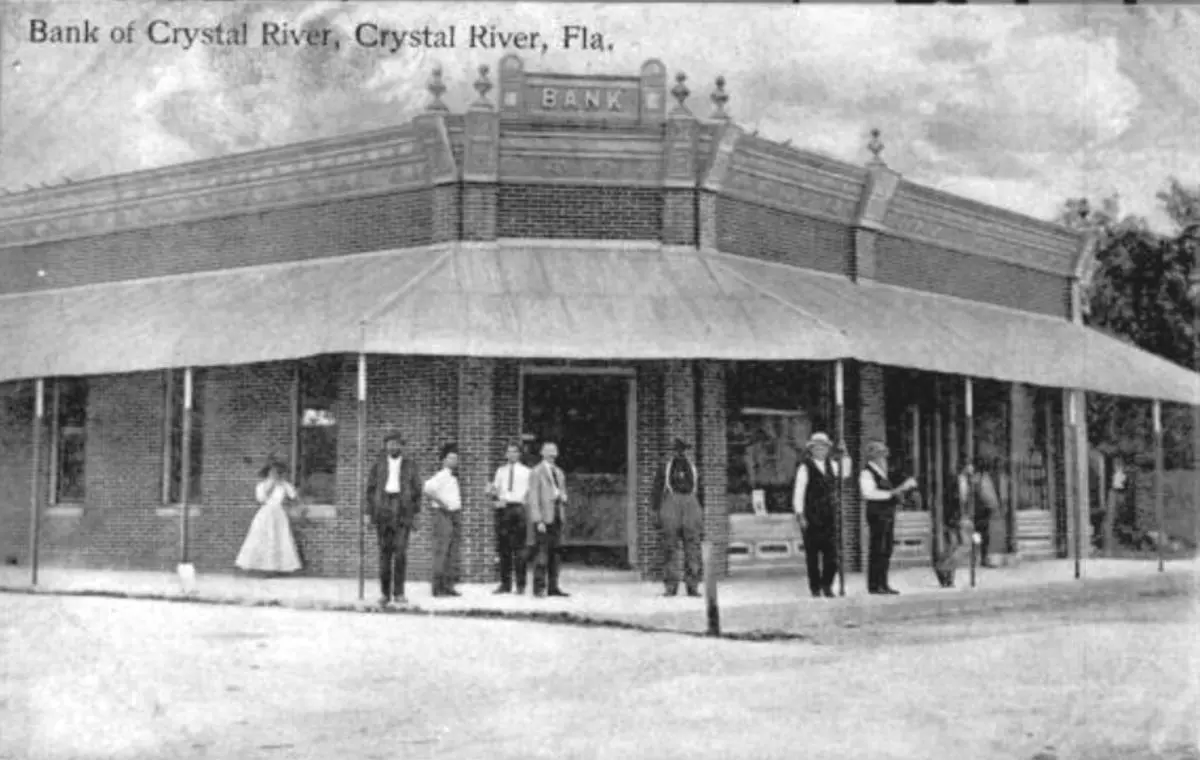
A very early industry in the area was the turpentine business. Many of the barges during the Civil War blockade had been carrying turpentine, likely from the turpentine still of William Turner, who resided in Red Level. Other early industry in the Crystal River area included cedar mills. In 1882, James Williams moved his cedar mill to Crystal River, and began operating on King's Bay. The mill produced pencil boards, which were then shipped to Jersey City, New Jersey, by ship, and later by train. The Dixon Cedar Mill was one of the largest industries in Crystal River, providing employment to many in the area, including women and African Americans.
Crystal River had been part of Hernando County since its inception in 1843. In 1844, the county name changed from "Hernando" to "Benton", in honor of Senator Thomas Hart Benton who had sponsored the Armed Occupation Act of 1842, which had brought settlers to the area. The county name returned to Hernando in 1850.
By the late 1800s, the area along the west side of the county was growing rapidly, and the citizens of the area began to see a need for a new county with a county seat that was easier to reach. In 1887, Hernando County was divided into three parts: Pasco County, Hernando County, and Citrus County. The town of Mannfield was named the temporary county seat for two years. Mannfield was chosen as it was in the geographic center of the new county and was more accessible to citizens. The site for the eventual county seat, Inverness, was decided by a vote in 1891.